

Fungal Acne Safe Face Mist: What to Use & What to Avoid
Share
If you've tried every acne product on the shelf and those tiny, itchy, same-sized bumps on your forehead, chest or jawline just won't budge, you might not be dealing with regular acne at all. You might be dealing with fungal acne, and the products you're using could be quietly making it worse.
Here's what fungal acne actually is, which ingredients to avoid, and how to build a fungal acne safe skincare routine that's simple, gentle and doesn't require throwing out everything you own.
What is fungal acne?
"Fungal acne" is the everyday name for Malassezia folliculitis (also called Pityrosporum folliculitis). Despite the name, it isn't true acne. It happens when Malassezia, a yeast that lives naturally on everyone's skin, overgrows inside hair follicles.
Malassezia feeds on oils, which is why it tends to flare in oily areas and in warm, humid conditions. Think Australian summers, post-gym sweat, tight activewear and heavy, rich moisturisers.
Fungal acne vs bacterial acne: how to tell the difference
| Fungal acne | Bacterial acne | |
|---|---|---|
| Look | Small, uniform bumps, often in clusters | Mixed sizes: blackheads, whiteheads, cysts |
| Feel | Often itchy | Usually tender or painful, rarely itchy |
| Where | Forehead, hairline, chest, back, shoulders | Anywhere, often cheeks, chin, jaw |
| Triggers | Heat, sweat, humidity, oily products | Hormones, clogged pores, bacteria |
| Typical acne products | Often don't help | Often help |
If your breakouts are itchy, uniform and got worse after a heatwave or a new rich cream, it's worth seeing your GP or dermatologist for a proper diagnosis. Fungal acne is easy to mistake for regular acne, and the right diagnosis saves months of frustration.
What makes skincare "fungal acne safe"?
A fungal acne safe product is one that doesn't contain ingredients Malassezia likes to feed on. The usual suspects are:
- Most plant oils (olive, coconut, argan, sunflower, rosehip)
- Fatty acids (lauric, oleic, stearic, palmitic, myristic acid)
- Esters (anything ending in "-ate", like isopropyl myristate or glyceryl stearate)
- Polysorbates (polysorbate 20, 60, 80)
- Fermented ingredients (galactomyces, saccharomyces ferments)
The catch is that these ingredients are everywhere, including in products marketed as "light", "gentle" or "for sensitive skin". Face mists and toners are a sneaky culprit: many contain botanical extracts, oils for "glow", fragrance and emulsifiers you'd never expect in something that looks like water.
That's why the simpler the ingredient list, the better when you're building a fungal acne safe routine.
Why hypochlorous acid is a fungal acne safe favourite
Hypochlorous acid (HOCl) has become one of the most talked-about ingredients for breakout-prone and reactive skin, and it ticks every box on the fungal acne safe checklist.
- Your body makes it. Hypochlorous acid is produced naturally by your white blood cells as part of your skin's own defence system. It's not a foreign, harsh chemical.
- No oils, no esters, no fatty acids. A well-made hypochlorous acid spray is mostly purified water with a tiny, precise amount of HOCl.
- Gentle enough for daily use. No alcohol, no fragrance, no stripping, so it won't wreck your skin barrier the way harsh astringents can.
- Easy to layer. A mist goes on in seconds and dries fast, so it fits before your moisturiser, after the gym, or whenever your skin needs a reset.
Is hypochlorous acid fungal acne safe?
Yes. Pure hypochlorous acid sprays are widely listed as fungal acne (Malassezia) safe by ingredient checkers, because the formula contains nothing Malassezia can feed on. Just check the full ingredient list of any spray you buy, since some brands add extracts, oils or fragrance on top.
Meet Endorphi Reset Mist: fungal acne safe, intentionally simple
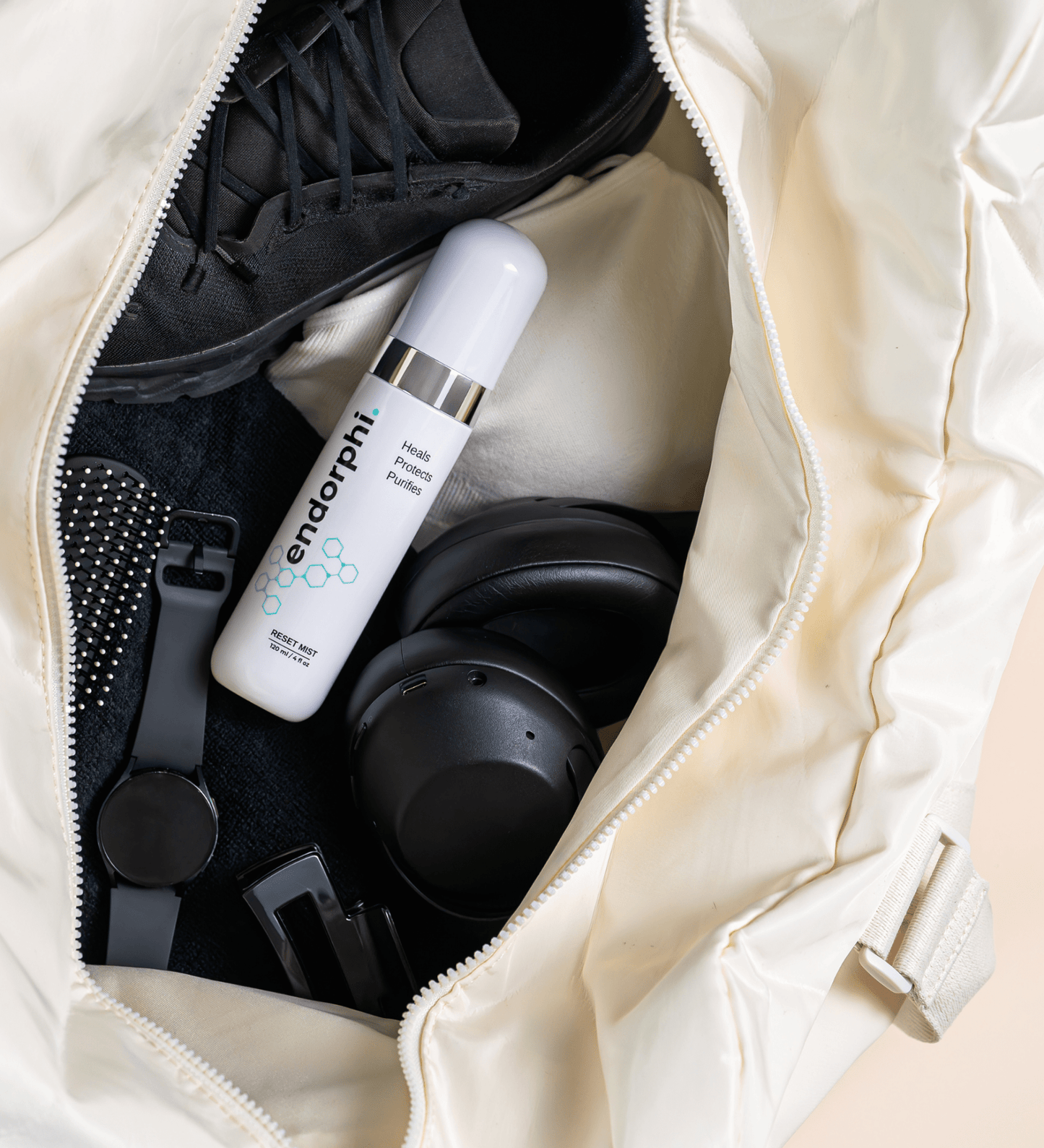
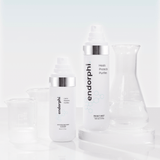
We created Endorphi Reset Mist for skin that's had enough of complicated routines. It's a hypochlorous acid face and body spray made in small, batch-tested runs here in Australia, so what reaches you is fresh.
Why Reset Mist fits a fungal acne safe routine:
- 200 ppm (0.02%) hypochlorous acid at the time of filling, in packaging tested to protect its concentration and pH
- No oils, fatty acids, esters, polysorbates, alcohol or fragrance
- Face and body: spray it on your forehead, chest, back and shoulders, the exact places fungal acne loves
- A fine, even mist that dries quickly with no sticky residue under makeup or activewear
- Small-batch freshness: made in batch-tested runs rather than sitting in a warehouse for months
And just as importantly, Reset Mist doesn't ask you to start over. At Endorphi, we believe in intentional skincare: every product is bottled for a reason, not a trend. Reset Mist isn't here to replace your routine. It's here to simplify and enhance the one you already have.
How to use Reset Mist in a fungal acne safe routine
Morning
- Cleanse with a gentle, fungal acne safe cleanser.
- Mist Reset Mist over face, neck and chest. Let it dry.
- Follow with a lightweight, fungal acne safe moisturiser and sunscreen.
After the gym or a sweaty day
- Change out of damp clothes as soon as you can.
- Mist Reset Mist over your face, chest, back and shoulders.
- Let it air-dry before putting on fresh clothes.
Evening
- Cleanse.
- Mist Reset Mist and let it dry.
- Apply your usual fungal acne safe products. For a cooling layer on skin that feels stressed, follow with our Advanced Recovery Hydrogel, which pairs the same 200 ppm hypochlorous acid with a gel texture.
One bottle lasts about 30 to 35 days with daily use, so it's an easy habit to keep.
More fungal acne safe tips that actually help
- Shower soon after exercise. Sweat sitting on skin is a Malassezia buffet.
- Wash pillowcases, hats and gym gear often. Anything that touches your forehead and chest counts.
- Choose breathable fabrics over tight synthetics where you can.
- Patch test new products and introduce one at a time so you know what's working.
- Read every ingredient list, including your sunscreen and makeup, not just your skincare.
- See a professional if it isn't improving. A GP or dermatologist can confirm what you're dealing with and recommend the right approach.
FAQ: fungal acne safe skincare
What does fungal acne look like?
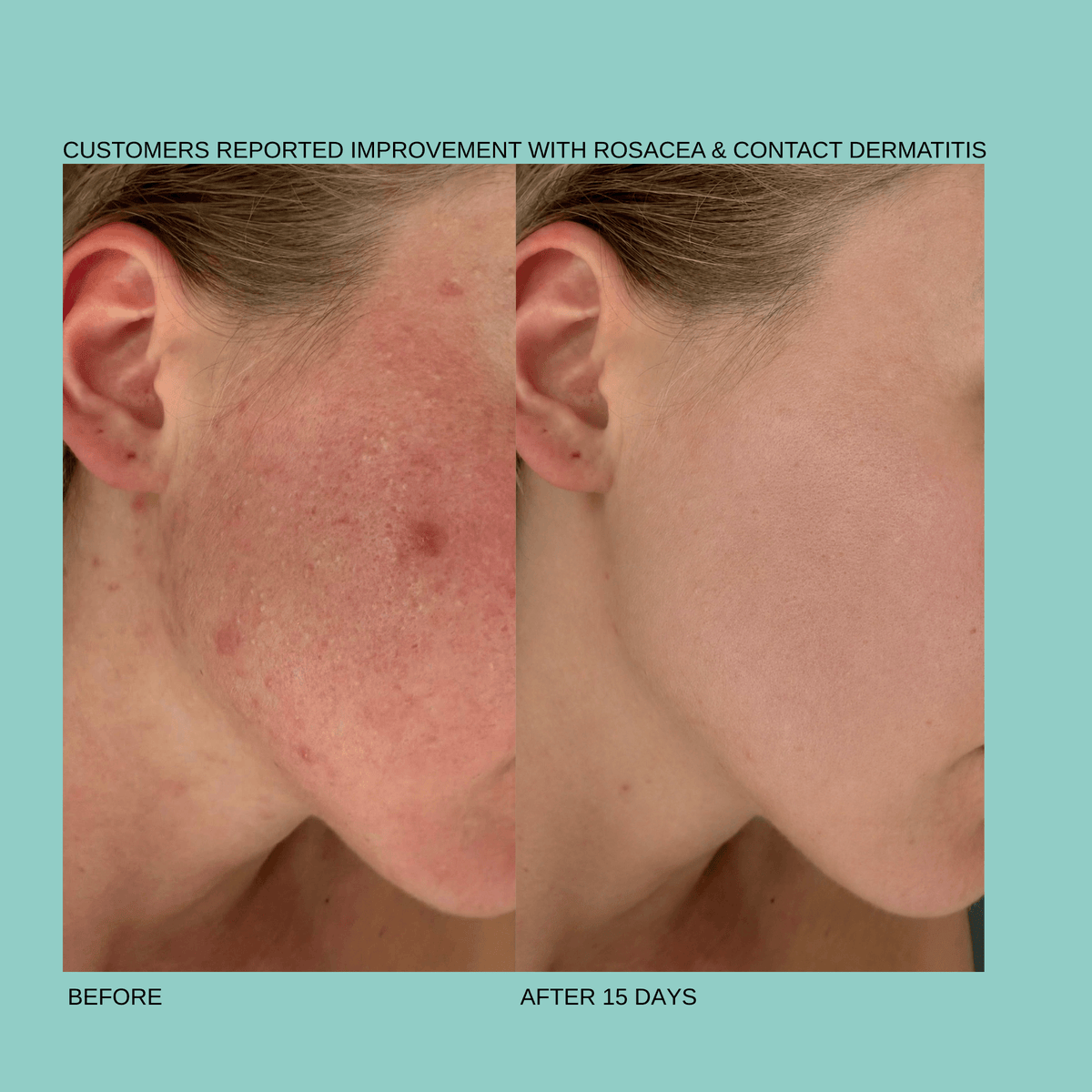
Small, uniform, often itchy bumps that cluster on the forehead, hairline, chest, back or shoulders. Unlike regular acne, you usually won't see a mix of blackheads, whiteheads and cysts.
Is hypochlorous acid fungal acne safe?
Pure hypochlorous acid sprays contain no oils, fatty acids or esters, so they're considered fungal acne safe. Always check the full ingredient list for added extracts or fragrance.
Can I use a face mist if I have fungal acne?
Yes, as long as it's fungal acne safe. Avoid mists with plant oils, fermented extracts, polysorbates or fragrance. A simple hypochlorous acid mist like Endorphi Reset Mist is a good fit.
Can I use Reset Mist on my body?
Yes. Reset Mist is a face and body spray, which makes it handy for chest, back and shoulders.
Do I need to change my whole routine?
No. Swap out any products with trigger ingredients, then add Reset Mist as a simple step. It's designed to slot into the routine you already have.
Where can I buy a fungal acne safe face mist in Australia?
Endorphi Reset Mist is made in Australia in small, batch-tested runs and ships Australia-wide from endorphi.com.au. Subscribe and save 20% on monthly, 3-monthly or 6-monthly deliveries.
The bottom line
Fungal acne needs a different approach to regular acne, and that starts with what you're putting on your skin. Strip your routine back to fungal acne safe products, keep sweat and humidity in check, and choose a mist that's as simple as possible.
This article is general information only and isn't medical advice. If your skin isn't improving, see your GP or dermatologist.